
Why Biometric Identification is becoming critical for end-to-end Blood Traceability

Blood transfusion is a life-saving procedure where accuracy is critical and errors are not an option. Even a single failure in patient identification can compromise blood traceability, putting patient safety and regulatory compliance at risk. As healthcare systems seek to eliminate these vulnerabilities, biometric identification is emerging as a reliable way to secure transfusion workflows from end to end.
Despite the critical nature of blood transfusions, many healthcare institutions still depend on identification methods that were not designed for zero-error clinical environments. Wristbands and manual checks introduce vulnerabilities that can compromise blood traceability, especially under pressure, during emergencies, or across multiple care settings. When patient identity cannot be verified with certainty at every step, the risk of mismatches, duplicate records, and adverse transfusion events increases, placing patient safety, clinical outcomes, and regulatory compliance at stake.
Blood Transfusion: A high-risk clinical process with zero margin for error
According to the World Health Organization (WHO), blood transfusion involves transferring blood or blood components from a donor to a recipient and is often essential to save lives. It is commonly used in surgeries, emergency and trauma care, cancer treatments, obstetric complications, and severe pediatric anemia.
Because transfusions are both life-saving and high-volume, even a single identification error can have severe consequences. The WHO, Centers for Disease Control and Prevention (CDC), and the International Society of Blood Transfusion (ISBT) consistently highlight patient misidentification as one of the leading causes of serious transfusion-related adverse events.
National regulatory bodies such as the FDA emphasize hemovigilance systems as essential tools for improving transfusion safety. These systems depend on accurate documentation, traceability, and accountability across the transfusion lifecycle.
- Reliable patient identification reinforces hemovigilance by:
- Providing verifiable, audit-ready identity records
- Reducing adverse transfusion events linked to misidentification
- Supporting internal reviews and external regulatory audits
- Improving data integrity across clinical systems
In this context, traceability is not optional, it is a foundational requirement for patient safety, clinical quality, and regulatory compliance.
The fragile foundation of Blood Traceability: Patient Identification
End-to-end blood traceability depends on one critical prerequisite: correctly identifying the patient at every stage of the transfusion process. From admission and blood sampling to cross-matching and administration, each step relies on the certainty that the right blood product is being delivered to the right person.
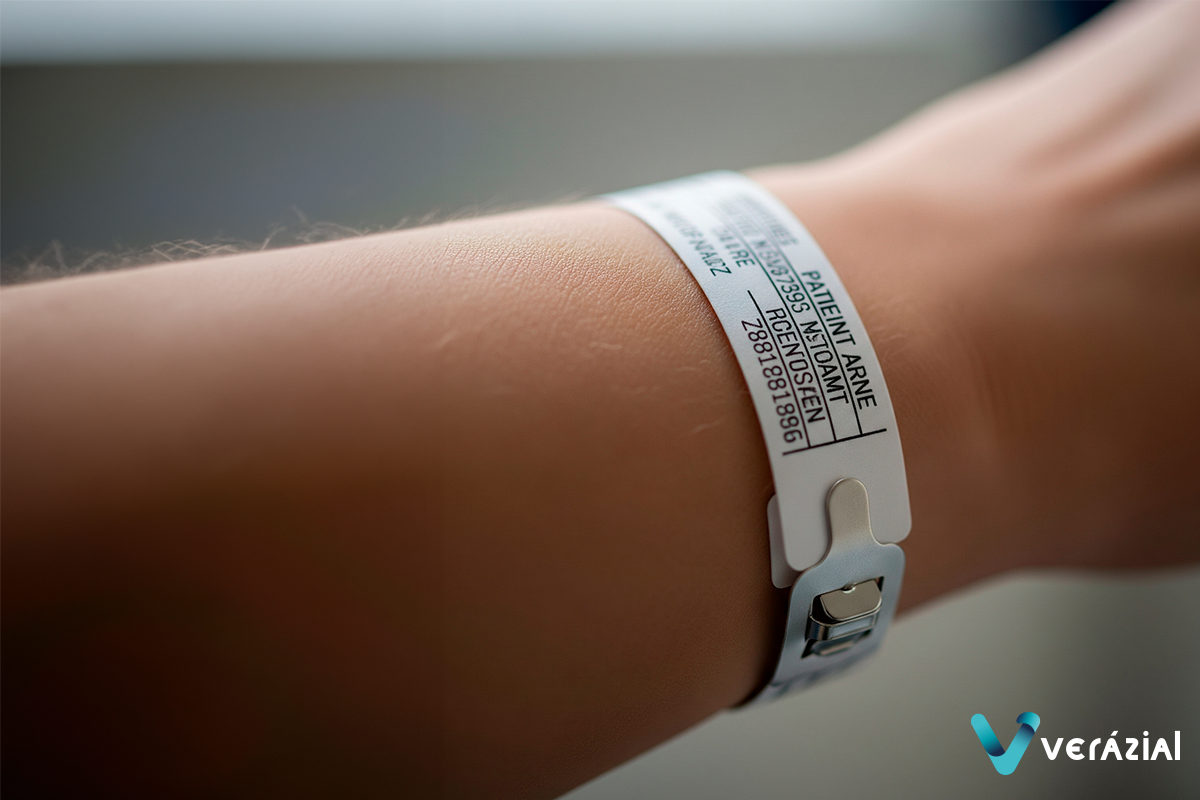
However, most healthcare institutions still rely on wristbands or identification bracelets as their primary identification method. While widely adopted, these tools were never designed to function as zero-error systems in high-pressure clinical environments.
As a result, patient identification often becomes the weakest link in an otherwise well-designed transfusion safety framework.
Why wristband-based identification breaks down in real clinical settings
In practice, wristbands introduce multiple failure points that directly undermine blood traceability:
- Admission and data-entry errors: Mistakes made during patient registration are immediately propagated throughout the care pathway. Once printed, the wristband reinforces incorrect information instead of correcting it.
- Misplacement, swaps, and tampering: Wristbands can be placed on the wrong patient, removed, exchanged, or altered, especially in pediatric wards or among cognitively impaired patients.
- Physical degradation: Wear, moisture, fading, or printing defects can render wristbands unreadable, breaking identification at critical moments.
- Inconsistent use across care settings: In outpatient treatments such as chemotherapy or radiotherapy, wristbands are often not used at all, leaving identification gaps.
- No protection against identity fraud: Wristbands validate data, not identity. False or duplicate identities can easily pass through the system undetected.
- Clinical limitations: Patients with burns, trauma, inflammation, or loss of consciousness may be unable to wear or present wristbands when identification is most urgent.
The Joint Commission and national hemovigilance programs repeatedly identify these factors as contributors to transfusion errors, emphasizing the need for more reliable identification mechanisms.
Read more about the limitations of wristbands in our article, “Patient Identification Wristbands: Are they enough to ensure Patient Safety?”
Reconnecting Blood Traceability to what matters most: The Patient
To ensure transfusion safety, identification must move beyond external objects and manual checks. The goal of traceability is not simply to track blood units, but to guarantee, with certainty, that each unit is administered to the correct patient.
This is where biometric identification fundamentally changes the model. By verifying identity directly from the patient rather than from a wearable device, healthcare institutions can establish a continuous, closed-loop link between patient, blood product, and clinical record.
Key operational advantages include:
- Secure patient identification at every transfusion step
- Elimination of identity swaps and impersonation
- Reliable verification for unconscious or non-communicative patients
- No dependency on wristbands or physical identifiers
- Direct linkage between identity, blood unit, and clinical documentation
- This approach strengthens traceability precisely where it is most vulnerable.
- Strengthening hemovigilance and regulatory compliance
By addressing identification at its root, healthcare providers transform hemovigilance from a reactive reporting process into a proactive safety mechanism.
From clinical risk reduction to strategic healthcare value
Improving patient identification in transfusion workflows delivers benefits that extend well beyond compliance:
- Lower exposure to adverse events and liability
- Increased confidence among clinical staff
- Stronger patient trust and transparency
- Faster, more reliable workflows
- A scalable foundation for digital health initiatives
As highlighted in our previous article “Critical Patient Identification Points in Hospitals: The Value of Biometrics”, transfusion is one of the clearest examples of how accurate identification directly protects lives.
Identity-driven traceability is the future of transfusion safety
In transfusion medicine, there is no acceptable error rate. Systems built around wristbands and manual verification are increasingly misaligned with the realities of modern healthcare. Reliable patient identification is the cornerstone of safe, traceable, and accountable transfusion practices.
When traceability depends on certainty, identity cannot be approximate. It must be precise, consistent, and resilient, at every step of the transfusion journey.
Find out how Verázial ID for Health can strengthen blood traceability and patient safety in your organisation.
Contact us for a demonstration and/or a tailored assessment.
References
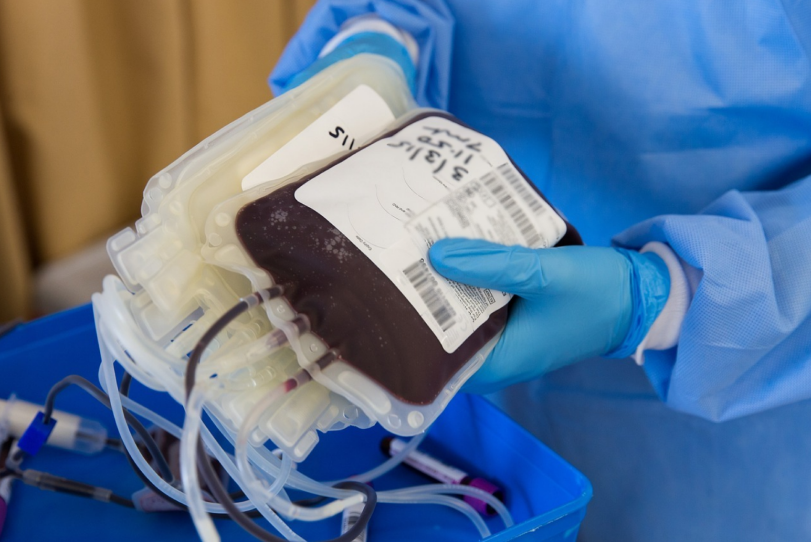
- Blood donation bags in a hospital [Pixabay]
Why Biometric Identification is becoming critical for end-to-end Blood Traceability
Blood transfusion is a life-saving procedure where accuracy is critical and errors are not an option. Even a single failure in patient identification can compromise blood traceability, putting patient safety and regulatory compliance at risk. As healthcare systems seek to eliminate these vulnerabilities, biometric identification is emerging as a reliable way to secure transfusion workflows from end to end.
Despite the critical nature of blood transfusions, many healthcare institutions still depend on identification methods that were not designed for zero-error clinical environments. Wristbands and manual checks introduce vulnerabilities that can compromise blood traceability, especially under pressure, during emergencies, or across multiple care settings. When patient identity cannot be verified with certainty at every step, the risk of mismatches, duplicate records, and adverse transfusion events increases, placing patient safety, clinical outcomes, and regulatory compliance at stake.
Blood Transfusion: A high-risk clinical process with zero margin for error
According to the World Health Organization (WHO), blood transfusion involves transferring blood or blood components from a donor to a recipient and is often essential to save lives. It is commonly used in surgeries, emergency and trauma care, cancer treatments, obstetric complications, and severe pediatric anemia.
Because transfusions are both life-saving and high-volume, even a single identification error can have severe consequences. The WHO, Centers for Disease Control and Prevention (CDC), and the International Society of Blood Transfusion (ISBT) consistently highlight patient misidentification as one of the leading causes of serious transfusion-related adverse events.
National regulatory bodies such as the FDA emphasize hemovigilance systems as essential tools for improving transfusion safety. These systems depend on accurate documentation, traceability, and accountability across the transfusion lifecycle.
- Reliable patient identification reinforces hemovigilance by:
- Providing verifiable, audit-ready identity records
- Reducing adverse transfusion events linked to misidentification
- Supporting internal reviews and external regulatory audits
- Improving data integrity across clinical systems
In this context, traceability is not optional, it is a foundational requirement for patient safety, clinical quality, and regulatory compliance.
The fragile foundation of Blood Traceability: Patient Identification
End-to-end blood traceability depends on one critical prerequisite: correctly identifying the patient at every stage of the transfusion process. From admission and blood sampling to cross-matching and administration, each step relies on the certainty that the right blood product is being delivered to the right person.
However, most healthcare institutions still rely on wristbands or identification bracelets as their primary identification method. While widely adopted, these tools were never designed to function as zero-error systems in high-pressure clinical environments.
As a result, patient identification often becomes the weakest link in an otherwise well-designed transfusion safety framework.
Why wristband-based identification breaks down in real clinical settings
In practice, wristbands introduce multiple failure points that directly undermine blood traceability:
- Admission and data-entry errors: Mistakes made during patient registration are immediately propagated throughout the care pathway. Once printed, the wristband reinforces incorrect information instead of correcting it.
- Misplacement, swaps, and tampering: Wristbands can be placed on the wrong patient, removed, exchanged, or altered, especially in pediatric wards or among cognitively impaired patients.
- Physical degradation: Wear, moisture, fading, or printing defects can render wristbands unreadable, breaking identification at critical moments.
- Inconsistent use across care settings: In outpatient treatments such as chemotherapy or radiotherapy, wristbands are often not used at all, leaving identification gaps.
- No protection against identity fraud: Wristbands validate data, not identity. False or duplicate identities can easily pass through the system undetected.
- Clinical limitations: Patients with burns, trauma, inflammation, or loss of consciousness may be unable to wear or present wristbands when identification is most urgent.
The Joint Commission and national hemovigilance programs repeatedly identify these factors as contributors to transfusion errors, emphasizing the need for more reliable identification mechanisms.
Read more about the limitations of wristbands in our article, “Patient Identification Wristbands: Are they enough to ensure Patient Safety?”
Reconnecting Blood Traceability to what matters most: The Patient
To ensure transfusion safety, identification must move beyond external objects and manual checks. The goal of traceability is not simply to track blood units, but to guarantee, with certainty, that each unit is administered to the correct patient.
This is where biometric identification fundamentally changes the model. By verifying identity directly from the patient rather than from a wearable device, healthcare institutions can establish a continuous, closed-loop link between patient, blood product, and clinical record.
Key operational advantages include:
- Secure patient identification at every transfusion step
- Elimination of identity swaps and impersonation
- Reliable verification for unconscious or non-communicative patients
- No dependency on wristbands or physical identifiers
- Direct linkage between identity, blood unit, and clinical documentation
- This approach strengthens traceability precisely where it is most vulnerable.
- Strengthening hemovigilance and regulatory compliance
By addressing identification at its root, healthcare providers transform hemovigilance from a reactive reporting process into a proactive safety mechanism.
From clinical risk reduction to strategic healthcare value
Improving patient identification in transfusion workflows delivers benefits that extend well beyond compliance:
- Lower exposure to adverse events and liability
- Increased confidence among clinical staff
- Stronger patient trust and transparency
- Faster, more reliable workflows
- A scalable foundation for digital health initiatives
As highlighted in our previous article “Critical Patient Identification Points in Hospitals: The Value of Biometrics”, transfusion is one of the clearest examples of how accurate identification directly protects lives.
Identity-driven traceability is the future of transfusion safety
In transfusion medicine, there is no acceptable error rate. Systems built around wristbands and manual verification are increasingly misaligned with the realities of modern healthcare. Reliable patient identification is the cornerstone of safe, traceable, and accountable transfusion practices.
When traceability depends on certainty, identity cannot be approximate. It must be precise, consistent, and resilient, at every step of the transfusion journey.
Find out how Verázial ID for Health can strengthen blood traceability and patient safety in your organisation.
Contact us for a demonstration and/or a tailored assessment.
References
- Blood donation bags in a hospital [Pixabay]
Why Biometric Identification is becoming critical for end-to-end Blood Traceability
Blood transfusion is a life-saving procedure where accuracy is critical and errors are not an option. Even a single failure in patient identification can compromise blood traceability, putting patient safety and regulatory compliance at risk. As healthcare systems seek to eliminate these vulnerabilities, biometric identification is emerging as a reliable way to secure transfusion workflows from end to end.
Despite the critical nature of blood transfusions, many healthcare institutions still depend on identification methods that were not designed for zero-error clinical environments. Wristbands and manual checks introduce vulnerabilities that can compromise blood traceability, especially under pressure, during emergencies, or across multiple care settings. When patient identity cannot be verified with certainty at every step, the risk of mismatches, duplicate records, and adverse transfusion events increases, placing patient safety, clinical outcomes, and regulatory compliance at stake.
Blood Transfusion: A high-risk clinical process with zero margin for error
According to the World Health Organization (WHO), blood transfusion involves transferring blood or blood components from a donor to a recipient and is often essential to save lives. It is commonly used in surgeries, emergency and trauma care, cancer treatments, obstetric complications, and severe pediatric anemia.
Because transfusions are both life-saving and high-volume, even a single identification error can have severe consequences. The WHO, Centers for Disease Control and Prevention (CDC), and the International Society of Blood Transfusion (ISBT) consistently highlight patient misidentification as one of the leading causes of serious transfusion-related adverse events.
National regulatory bodies such as the FDA emphasize hemovigilance systems as essential tools for improving transfusion safety. These systems depend on accurate documentation, traceability, and accountability across the transfusion lifecycle.
- Reliable patient identification reinforces hemovigilance by:
- Providing verifiable, audit-ready identity records
- Reducing adverse transfusion events linked to misidentification
- Supporting internal reviews and external regulatory audits
- Improving data integrity across clinical systems
In this context, traceability is not optional, it is a foundational requirement for patient safety, clinical quality, and regulatory compliance.
The fragile foundation of Blood Traceability: Patient Identification
End-to-end blood traceability depends on one critical prerequisite: correctly identifying the patient at every stage of the transfusion process. From admission and blood sampling to cross-matching and administration, each step relies on the certainty that the right blood product is being delivered to the right person.
However, most healthcare institutions still rely on wristbands or identification bracelets as their primary identification method. While widely adopted, these tools were never designed to function as zero-error systems in high-pressure clinical environments.
As a result, patient identification often becomes the weakest link in an otherwise well-designed transfusion safety framework.
Why wristband-based identification breaks down in real clinical settings
In practice, wristbands introduce multiple failure points that directly undermine blood traceability:
- Admission and data-entry errors: Mistakes made during patient registration are immediately propagated throughout the care pathway. Once printed, the wristband reinforces incorrect information instead of correcting it.
- Misplacement, swaps, and tampering: Wristbands can be placed on the wrong patient, removed, exchanged, or altered, especially in pediatric wards or among cognitively impaired patients.
- Physical degradation: Wear, moisture, fading, or printing defects can render wristbands unreadable, breaking identification at critical moments.
- Inconsistent use across care settings: In outpatient treatments such as chemotherapy or radiotherapy, wristbands are often not used at all, leaving identification gaps.
- No protection against identity fraud: Wristbands validate data, not identity. False or duplicate identities can easily pass through the system undetected.
- Clinical limitations: Patients with burns, trauma, inflammation, or loss of consciousness may be unable to wear or present wristbands when identification is most urgent.
The Joint Commission and national hemovigilance programs repeatedly identify these factors as contributors to transfusion errors, emphasizing the need for more reliable identification mechanisms.
Read more about the limitations of wristbands in our article, “Patient Identification Wristbands: Are they enough to ensure Patient Safety?”
Reconnecting Blood Traceability to what matters most: The Patient
To ensure transfusion safety, identification must move beyond external objects and manual checks. The goal of traceability is not simply to track blood units, but to guarantee, with certainty, that each unit is administered to the correct patient.
This is where biometric identification fundamentally changes the model. By verifying identity directly from the patient rather than from a wearable device, healthcare institutions can establish a continuous, closed-loop link between patient, blood product, and clinical record.
Key operational advantages include:
- Secure patient identification at every transfusion step
- Elimination of identity swaps and impersonation
- Reliable verification for unconscious or non-communicative patients
- No dependency on wristbands or physical identifiers
- Direct linkage between identity, blood unit, and clinical documentation
- This approach strengthens traceability precisely where it is most vulnerable.
- Strengthening hemovigilance and regulatory compliance
By addressing identification at its root, healthcare providers transform hemovigilance from a reactive reporting process into a proactive safety mechanism.
From clinical risk reduction to strategic healthcare value
Improving patient identification in transfusion workflows delivers benefits that extend well beyond compliance:
- Lower exposure to adverse events and liability
- Increased confidence among clinical staff
- Stronger patient trust and transparency
- Faster, more reliable workflows
- A scalable foundation for digital health initiatives
As highlighted in our previous article “Critical Patient Identification Points in Hospitals: The Value of Biometrics”, transfusion is one of the clearest examples of how accurate identification directly protects lives.
Identity-driven traceability is the future of transfusion safety
In transfusion medicine, there is no acceptable error rate. Systems built around wristbands and manual verification are increasingly misaligned with the realities of modern healthcare. Reliable patient identification is the cornerstone of safe, traceable, and accountable transfusion practices.
When traceability depends on certainty, identity cannot be approximate. It must be precise, consistent, and resilient, at every step of the transfusion journey.
Find out how Verázial ID for Health can strengthen blood traceability and patient safety in your organisation.
Contact us for a demonstration and/or a tailored assessment.
References
- Blood donation bags in a hospital [Pixabay]
You May Also Like


You May Also Like